

Studio Musings
The Art of Edges
Edges in paint define a shape, colour or tone as distinct from what surrounds it. Where the edge sits is largely determined by our perception of where those limits are. An edge exists in an area of transition. How a painter manages that edge contributes greatly to the viewer’s journey within their painting as well as the visual narrative they are trying to express.
In painting
There are 4 main kinds of edges. The first 3 apply mostly to tonal relationships. The 4th is about colour relationships and a whole other wormhole to travel down for a blog to come.
1. Edges can be lost, saying to our viewer ‘you can slide your eye over this passage easily’. Forms mingle with space.
2. Blurry edges give definition, but don’t catch your eye. They provide structure.
3. Sharp edges pull your eye by creating definition, visual clarity and focus.
4. Optical edges are more complex. This is where two or more distinct colours sit next to or near each other. Our vision vibrates with the sensation and what we optically perceive is a mixture of those colours. The impressionists introduced us to this technique. Georges-Pierre Seurat created beautiful, almost pearly light affects and atmosphere using points of colour. Colour field painters of the 1950’s such as Rothko really took this exploration further by creating fields of colour that challenged our spatial perception.
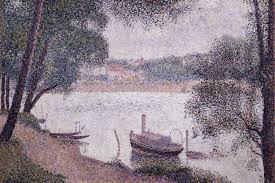
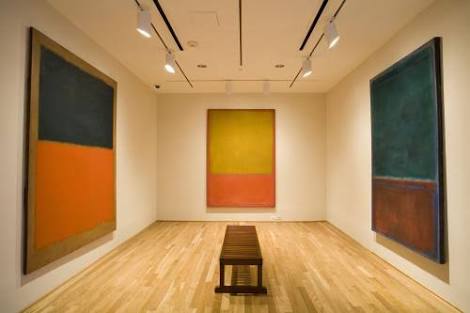
Edges are such a deep area of study in painting and I’ve only just skimmed the surface here in classifying edge types. These transition zones are where light and form mingle, dancing together to create atmosphere. Or they can be definite, contrasting and create structure. Other edges just quietly sit in a painting and recede into the background. While a painting can be about ‘something’ – a narrative, edges create the poetry in the painting. How you discover the content is shaped by your journey through the edges within that painting. As a painter I’m creating an eye journey through weaving edges.
In psychology
In my years of work as a psychotherapist I’ve loved the art of edge work. Edges mean something very particular in Process Oriented Psychology or Process Work. An edge is defined as the limits of how you identify yourself. What is over your edge is the ‘not me’ experience or what you experience as ‘other’. Although this limit is fluid, it needs to exist. Your edge is littered with cultural systems and beliefs, geographical location and climate, life experiences, critical figures, privileges and oppressions to name a few. The list can be lengthy, but basically it’s what you consider as ‘other’. It can be the air outside of your skin or last night’s dream that seems so strange and mysterious, or the challenge that you set yourself to grow in some way.
What I absolutely love about Process Work is that it doesn’t emphasise crossing your edge. Rather edges are rich places of growth and understanding. Some edges need to be crossed and others don’t. Some edges need reinforcement and support to strengthen your identity. Other edges are just a long slow transition through understanding. Working with our personal edges is truely an art that requires a lot of self compassion, patience and help from others. Everybody navigates edges differently and how this happens largely depends upon the edge itself. Each edge presents its own challenge and there can never be a formula.
I know this is a very short summary of a big concept. Psychology and painting are two worlds that have been wrestling in me for decades and I want to share a little of my learnings with you Dear Reader. Edges ask for a lot of consideration. The push-pull of identity and of paint are both important. We wrestle at our edges and often mishaps, chance and dreams help us cross. Psychology has taught me that in paint;
- Slowing down is important.
- My painting is the landscape. I step back and survey it frequently to find out what my painting wants.
- To ask myself ‘what is asking for definition in this painting?’
- There is no formula for navigating an edge. What surrounds an edge – the colours, shapes, contrasts etc. determine what kind of edge needs to be there in relation to the bigger picture.
- The push-pull of paint finds the edge. I don’t want to be too knowing about how to work with edges or they will become too predictable. Living life closely to an edge is where I feel most alive and growing.
Finally, I want to say that painting the way trees mingle with the sky has been my greatest teacher in pulling this hard fought lesson together.
Thankyou for reading.
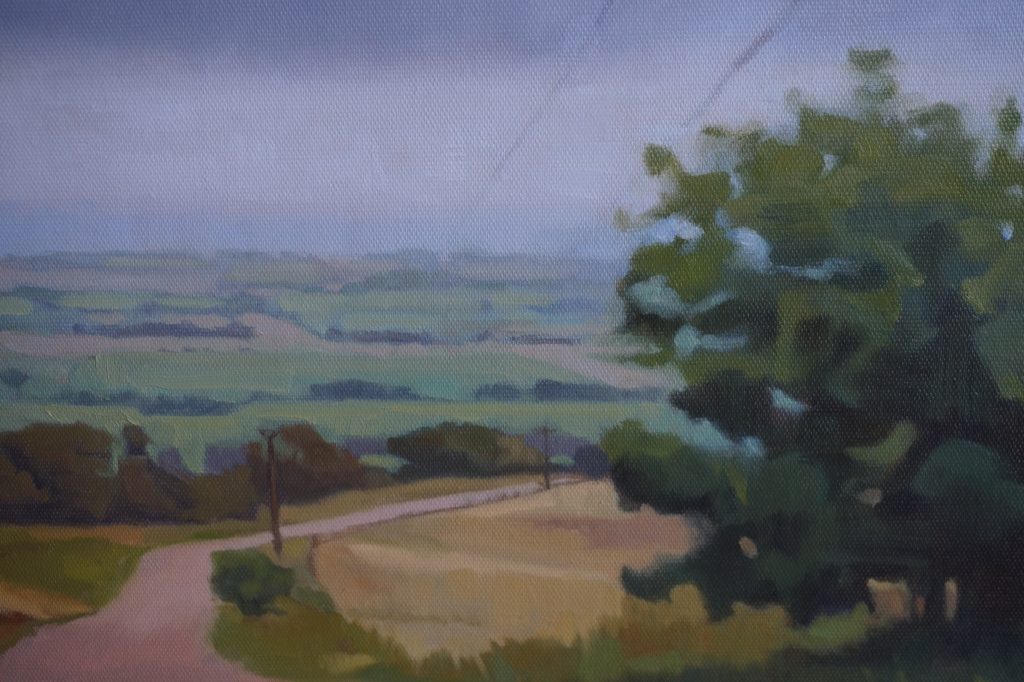
The featured image is a section of a painting that I’m currently working on. I’m half way through and enjoying the edges. The painting’s name hasn’t arrived yet.
Please feel free to share my blog. You can also subscribe below to receive it in your inbox. Just scroll to the bottom of the page.

Related posts
Studio Musings
THE PATHLESS PATH – AN INVITATION
A reflection on the parallel between the process of painting and hiking or bushwalking
Studio Musings
PRESENCE
I’ve been thinking about PRESENCE lately. What does the word mean? This post explores the wholeness of presence.
Reviews, Studio Musings
VERMEER’S QUIET TENSION
This post is a review of the Vermeer exhibition at the Rijk Museum in 2023.
Art News, Studio Musings
FINLAND RESIDENCY REFLECTIONS
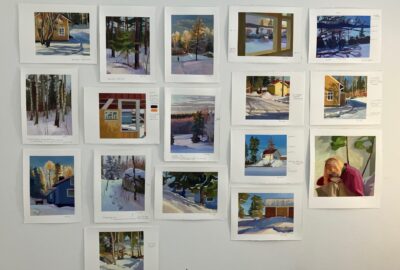
I have been considering how the artist residency at Arteles Creative Centre is set up to maximise the possibility for entering a flow state.
Art News, Studio Musings
SNOW STUDY- A Letter from Finland
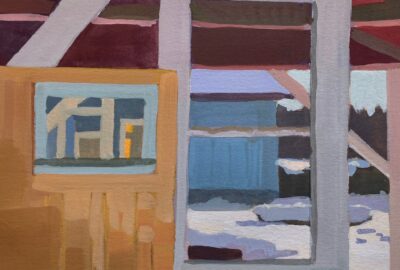
Featured Image: A view from the shed – gouache study on paper Now into the…
Leave a reply
You must be logged in to post a comment.