

Reviews
SOROLLA’S HOUSE- an Extended Postcard
Hi,
Sit down with a tea and get comfortable because this is a long one. I’ve been in Madrid now for nearly 2 weeks, and have set myself up in an apartment to be able to paint. I’ve organised my days to paint most mornings, and immerse myself in museums during the afternoons as most places close at 8 pm. My rooftop apartment has the loveliest views overlooking the city on one side, and down into a square at the other end. It’s perfect for studying the sky, light and weather conditions throughout the day. I admit sometimes I’m torn to leave this place.
Nearby is this the Sorolla museum. Joaquin Sorolla built, lived and painted in this house. Although now a museum, it is preserved as how Sorolla and his family would have lived in it. Housed here is the largest collection of Sorolla’s paintings, and he was prolific! Sorolla could only paint fast, executing large canvases in a matter of days. He was a well known and celebrated painter in his day and you can read more about him here
I want to talk about his paintings, because you can’t separate the person from their work. I am interested in paint and what paint tells me about the person. I’ve been drawn to Sorolla’s paintings for a long time for a number of reasons.
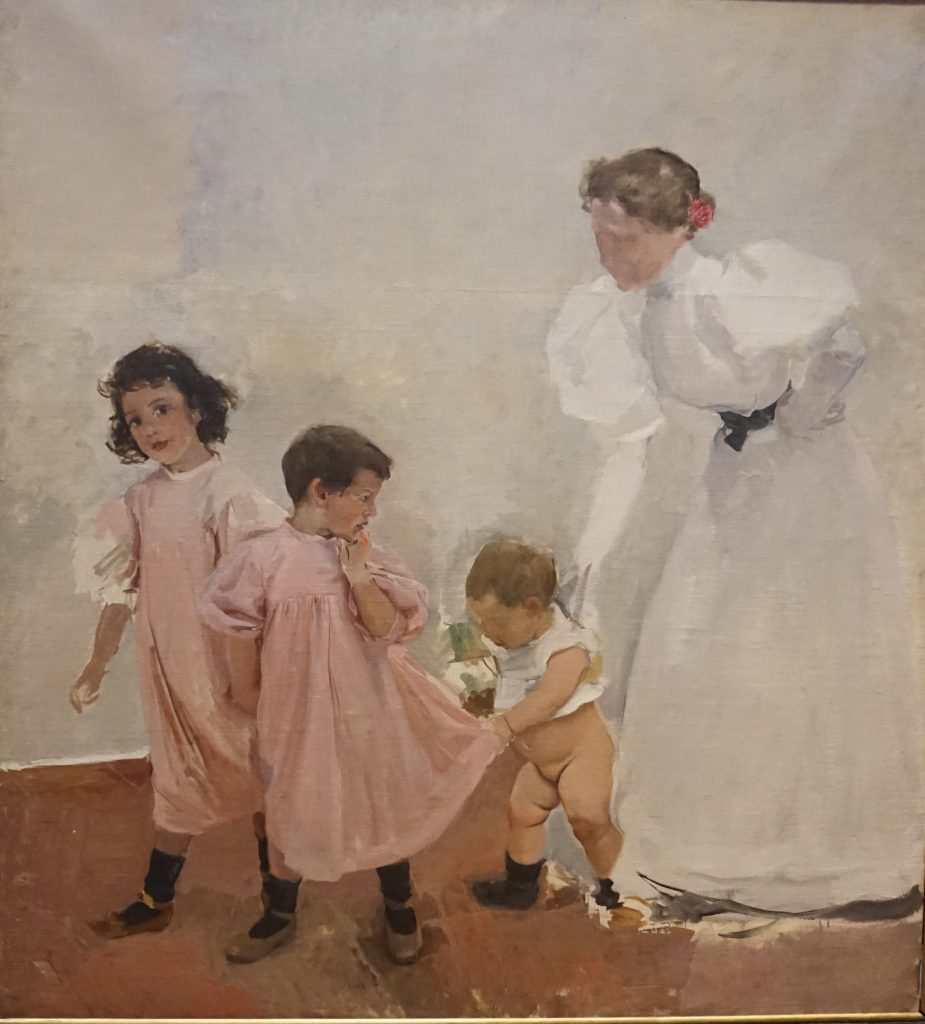
Firstly, while Sorolla’s subject matter varied greatly from formal portraits, commissions and social realism early on, it’s his intimate depiction of his family in everyday life that is so interesting. In my observation, its not so common for a male artist to do that. These were paintings for Sorolla himself and are filled with the loose freedom of experimental brushwork. They capture the spontaneity of everyday life. Sorolla was also a keen photographer (after working in his father in laws photographic studio), and this experience greatly affected his compositions. In many paintings people are half cut off, as would be the case in a photograph. Such framing amplifies our perception of a moment caught in time.
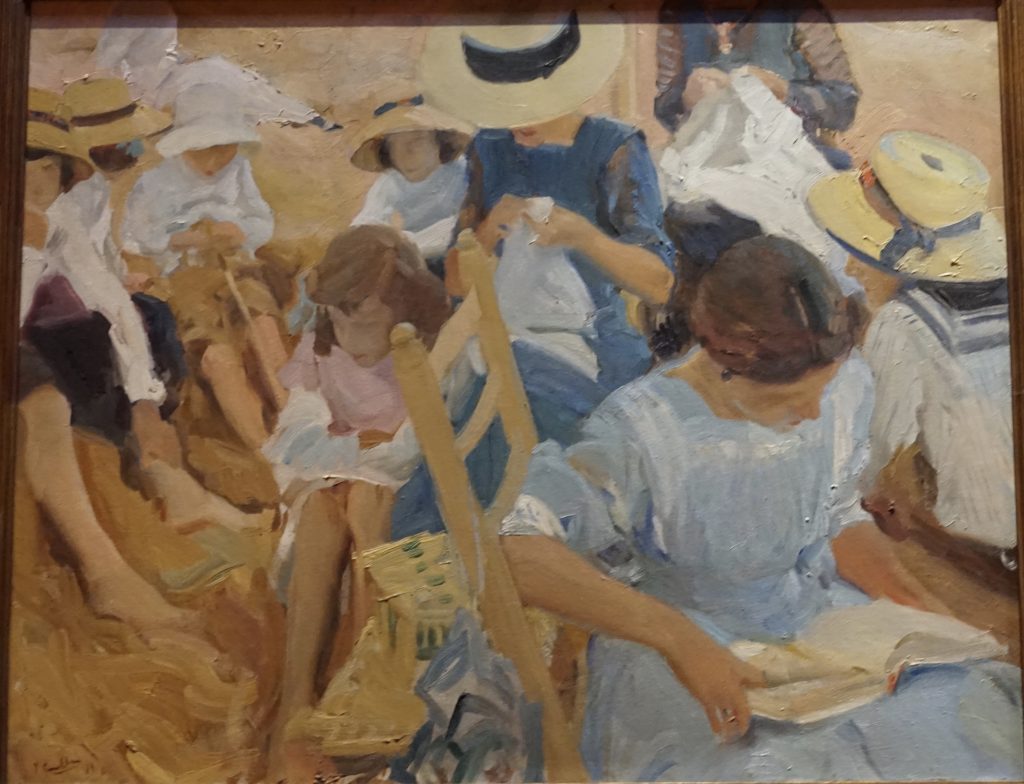
While sorolla sometimes used photographs, had a background in photography and used photographic framing as a pictorial device for his compositions, he mostly painted from life. His real subject matter is light.
I want to appreciate the fluid execution of his work and the way he responded so immediately to his chosen subject. His brushwork varies from the beautiful blending of someone trained academically, to areas of information that are roughly painted. Everything in his paintings support the area of focus and the overall narrative of the painting. What makes him a master is that just enough is there for many of his paintings to look complete when you stand back.
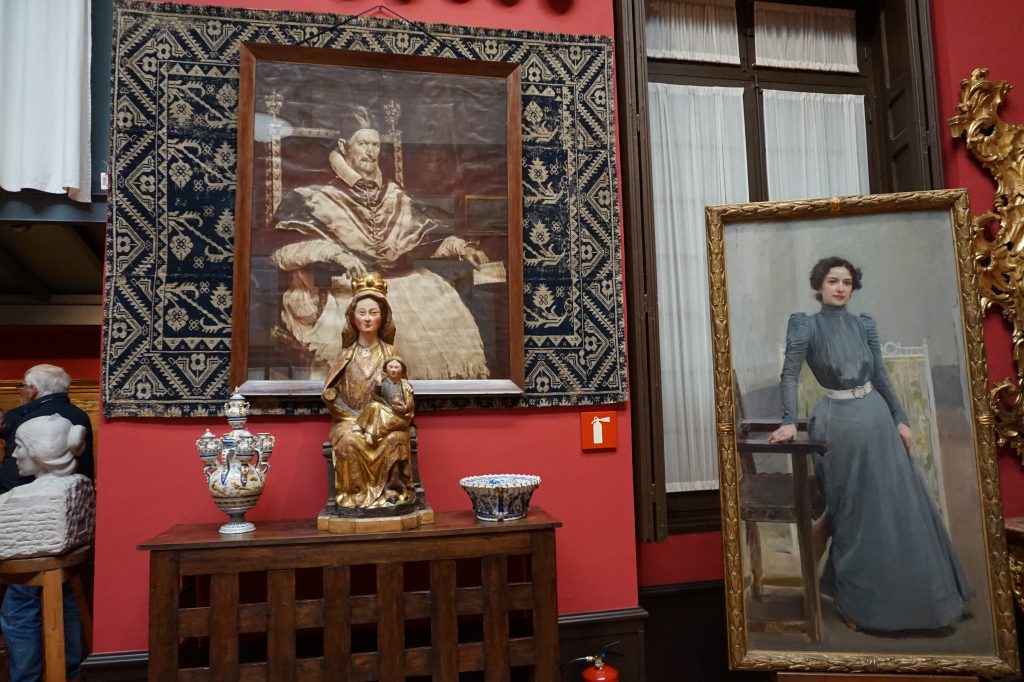
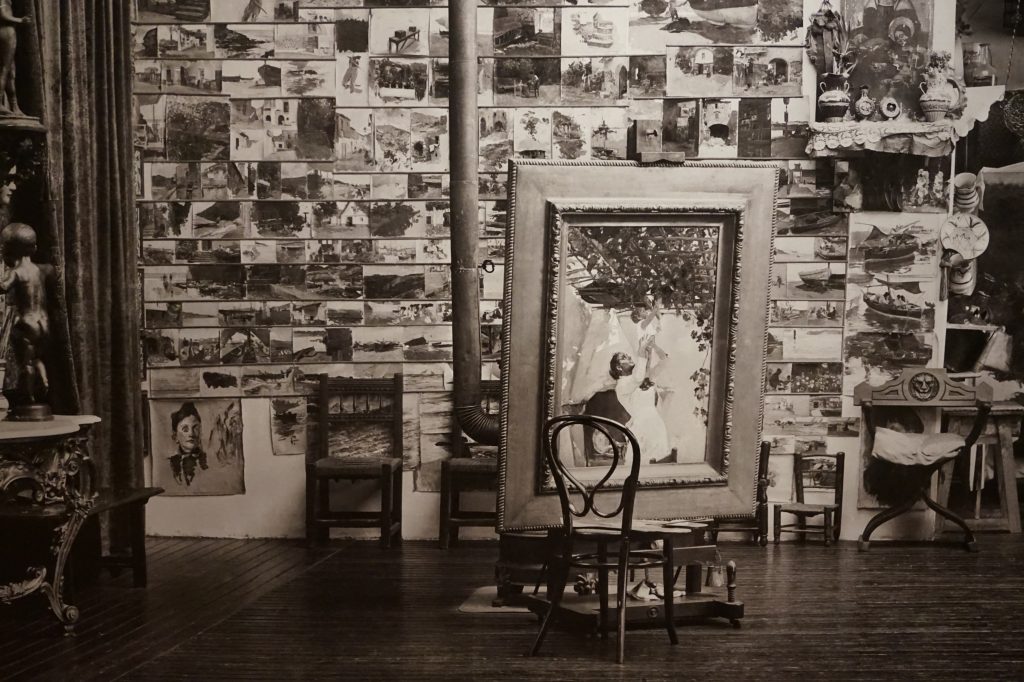
Sorolla greatly admired Velázquez, and had a large photograph of Velázquez’s painting of the pope in his studio. The story behind this painting is that Velázquez was born Jewish and was baptised when he was young. He was an aspiring man and wanted to become part of the Spanish aristocracy as he had been the king’s painter for many years. He was aware that his Jewish background was a limitation to his aspirations, so he ingratiated himself to the pope by painting his portrait in the hope he would write a letter of support in Velázquez’s favour. Velázquez needed his support. In the pope’s hand is Velázquez’s petition. It took 9 years for the pope to consider Velázquez’s application and grant this favour. I’m writing this after seeing this documentary on Velázquez and I wonder, why did Sorolla choose that painting? There was no information about it at Sorolla’s house. This large black and white photograph is set up like a shrine in Sorolla’s studio. Could it be to honour Velázquez’s persistance of spirit? Velázquez would have had to see the humanity into the pope and form a relationship with him to paint him. What a challenge because the pope was reluctant to have his portrait painted! It’s a tricky relationship with power. Could the pope with the letter represent a judgment of how history will regard Velázquez as a painter? How did Sorolla feel about that? Could it also be about the sacrifices a painter like Sorolla has to make to be recognised for his work? It’s a mystery to me, but this painting did speak to Sorolla directly in some way, beyond it being a great painting, for it to hold a prominent position in his studio.
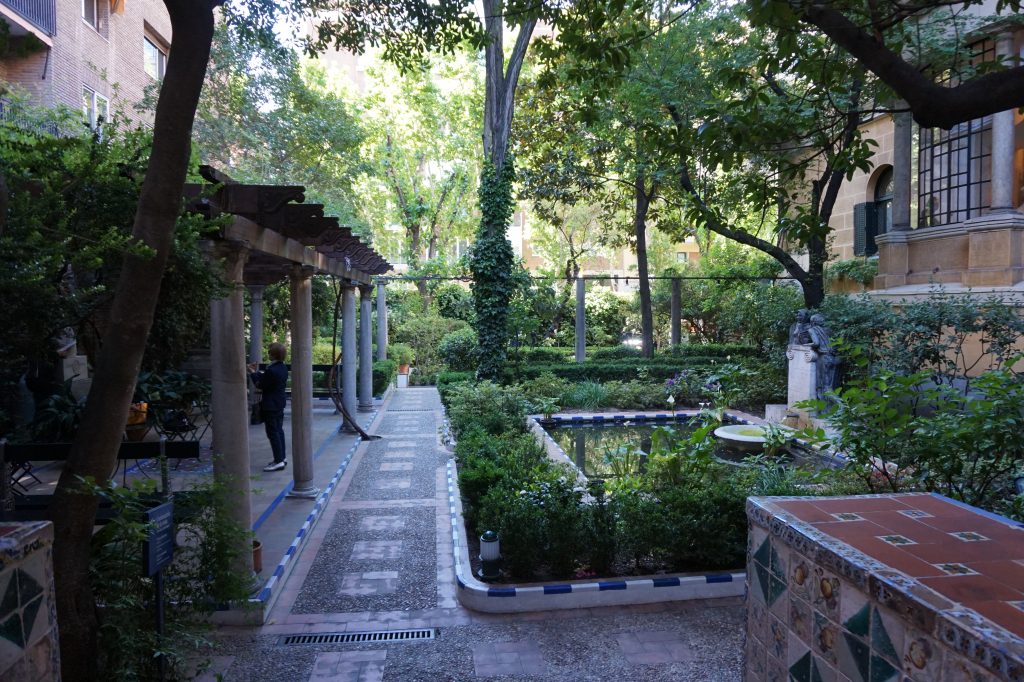
Sorolla’s depiction of light is breathtaking. The high ceilings with skylights in his house enhance the sense of air and light when looking at his work. The gardens that surround the building are a little sanctuary in Madrid. What is outside the window is reflected in his work. This is not a heavy dark museum.
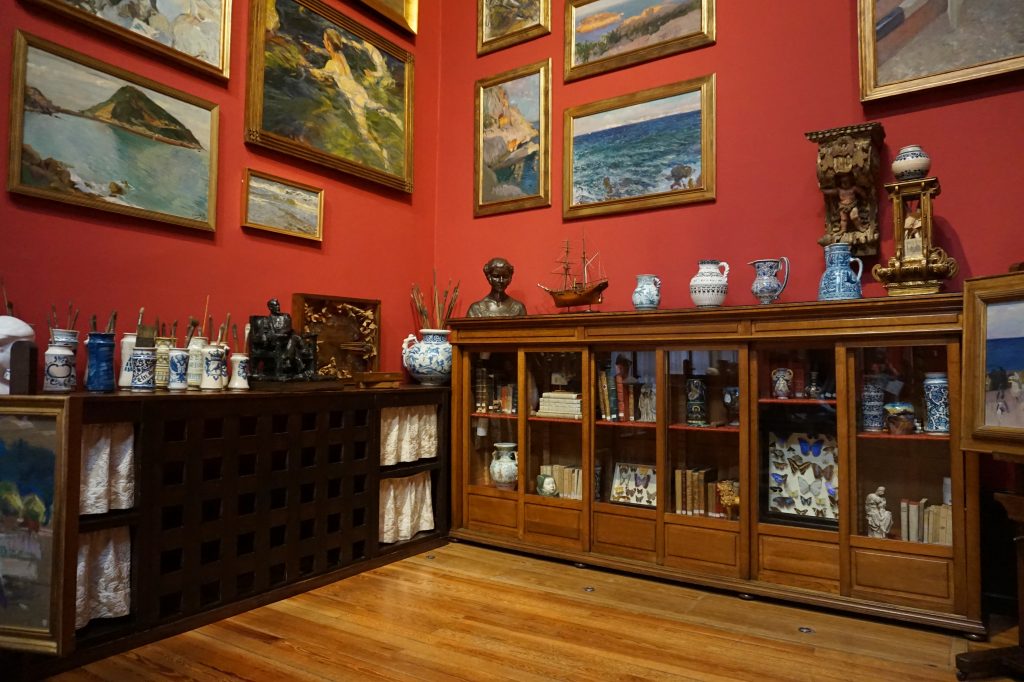
Sorolla incorporated the way the French impressionist used complementary colours and paid very close attention to colour temperature, and reflected light. It’s how he achieved the luminous whites in his paintings and why his paintings glow. Attention to temperature and reflected light is also important in his shadows. Yet he didn’t take on their brush work of small patches of broken colour. His big works, often painted en plein air, are painted with big brushes, shapes and gestures. He was acutely aware of how Velázquez used broken colour long before the impressionists.
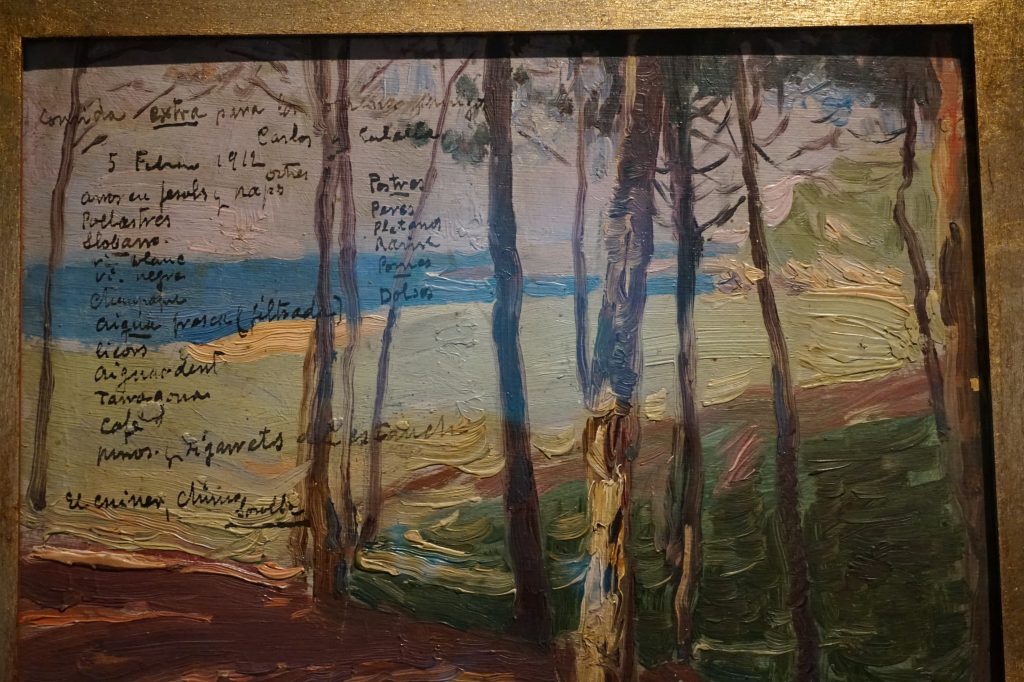
Lastly, I want to talk about a special exhibition that was on of Sorolla’s small plein air studies. These works were painted on paper, bits of cardboard and odd bits of wood. He called these his ‘colour notes’ and executed them throughout his life.
The Sorolla Museum has over 2000 of them and they were the most precious and fascinating things I saw. These works really give you an insight into Sorolla’s thinking, his perception, and his world. Some contain written notes. In his later years he tried to get his simplified colour notes down to capture the essence of light and atmosphere. As the demand for studio commissions increasingly took up most of his time, he grew to value his plein air colour note experience even more.
I’m still digesting my time in Madrid and all the lessons I’ve learned about paint through studying paintings. It’s a little overwhelming and I’m grateful for the time to think, sleep and dream. I hope you’ve enjoyed this short journey to Joaquin Sorolla’s house. Feel free to share my post. Leave me a comment if you feel moved.
Thanks for reading,
warmly Lynn
You can sign up for my blog or newsletter here.


Related posts
Reviews, Studio Musings
VERMEER’S QUIET TENSION
This post is a review of the Vermeer exhibition at the Rijk Museum in 2023.
Reviews
Journey into DIVIDED WORLDS
Hi, Mad March is over in Adelaide and we had a really fantastic festival. I…
Reviews, Studio Musings
SHRINE 5 – IMAGINE
Dear Reader, I love imagining things. Imagination is a gift of nature and essential for…
Reviews
TARNANTHI LAYERS
Dear Reader, Adelaide is hosting the inaugural indigenous arts festival called TARNANTHI. Our galleries and…
Leave a reply
You must be logged in to post a comment.
2 Comments
SusanK
lynn – what a glorious blog post, i felt like I had been in, to and from the museum with you. Feeling inspired by your schedule and the details of your interest, visit and understanding of paint, painting and technique. But also of dreaming. Thank you XOX
One thought I had was of the agony of anti-semitism – that Velasquez was not free to live his lineage and his birthright pains me – the picture then of the Pope has an effect on me of a kind of agony – Spains’ destruction of its Jewish population during the inquisition was almost 100% effective and imagining Velasquez giving up his identity for his art, having to wait for the Pope and so on, I wonder at what Sorolla felt about that. Reading up on him, I read that he lived through many tragedies of his own . . . this being human . . .
Lynn Lobo
Hi Susan,
Sorry for my late reply. I believe you are spot on. Dealing with the ancestral trauma of legitimacy and class is extremely vexed. I think perhaps that’s why Sorolla appreciated his family so much.